 Español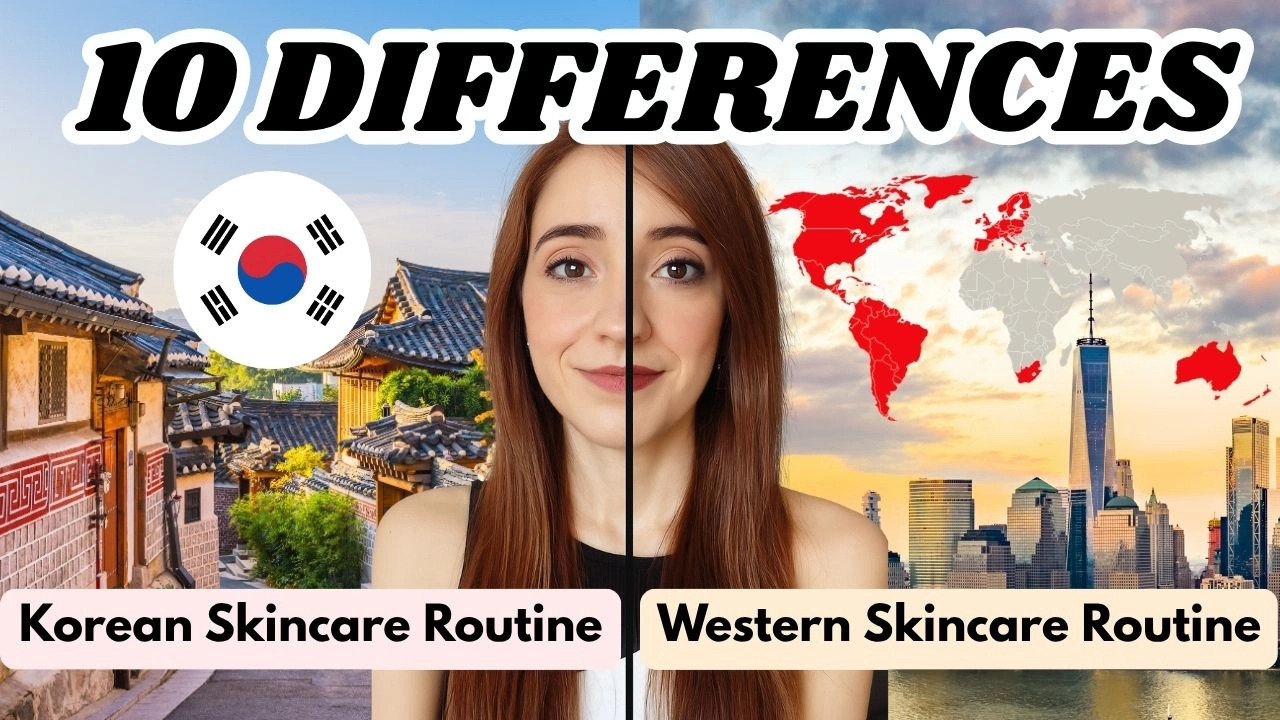
In the fascinating universe of modern skincare, two major superpowers coexist, dictating the rules of how we care for our faces: traditional Western dermocosmetics and the unstoppable phenomenon of Korean cosmetics, or K-Beauty. Both markets generate billions of euros a year and have devoted followers defending their benefits. However, when sitting at the dressing table, many users feel completely overwhelmed by philosophies that seem diametrically opposed.
Is it better to saturate the skin with hydration through lightweight layers or bet on the power of a single concentrated serum? Should we prevent or correct? As a pharmacist specialized in cosmetic science, I love analyzing skincare formulations and methodologies from an evidence-based and molecular-rigor perspective. In this article, we will break down in detail the 10 fundamental differences between the Korean and Western facial routines, analyzing their active ingredients, galenics, and dermatological focus so you can learn to extract the best of both worlds according to your skin's real needs.
📺 I explain it to you on video! Don't miss the complete educational analysis with the pros and cons of each routine on my YouTube channel:
Comparative Table: Summary of Key Differences
To provide you with an instant panoramic vision before diving into the technical breakdown, I have synthesized the behavior of both care methodologies in this comparative table:
| CHARACTERISTICS | KOREAN ROUTINE | WESTERN ROUTINE |
|---|---|---|
| Base Focus | Long-term prevention and barrier protection. | Short-term correction of already visible signs (wrinkles, spots). |
| Skin Ideal | Glass skin: Ultra-dewy, translucent skin with a healthy glow. | Matte, velvety, polished skin free of imperfections. |
| Number of Steps | Extensive and layered (traditional 10-step system). | Minimalist and direct (cleansing, treatment, and cream). |
| Technical Application | By layers of increasing density (aqueous layering). | Concentrated all-in-one multifunctional formulas. |
| Star Actives | Soothing and natural (Centella asiatica, snail mucin). | Synthetic transformers (Pure retinol, Glycolic acid). |
| Concentrations | Low-to-moderate to ensure absolute daily tolerance. | High concentrations seeking rapid clinical impact. |
| Photoprotection | Next-generation serum-like textures (advanced organic filters). | Classic emulsions, sometimes dense or traditional protective creams. |
| Exfoliation | Ultra-gentle physical or chemical with high molecular weight PHAs. | Deep chemical with intensive AHAs (free Glycolic acid). |
| Ingredient Origin | Plant biotechnology and traditional Hanbang medicine. | Purely clinical dermatological laboratory synthesis. |
| Innovation Pace | Ultra-fast; constant launches due to high internal competition. | Moderate and conservative; prolonged testing before reformulation. |
The 10 Fundamental Differences Explained by a Pharmacist
1. Core Philosophy: Prevention vs. Correction
K-Beauty understands skincare as a long-distance race that begins in childhood. Its main goal is to nourish, hydrate, and protect cells constantly to prevent damage from appearing. In contrast, Western cosmetics have an eminently corrective or "rescue" approach: the Western consumer usually goes to the pharmacy or perfumery only when they already detect established wrinkles, sun spots, or a loss of firmness, seeking to reverse the signs of aging express-style.
📺 I explain it in under a minute in a reel on my YouTube channel!
2. The Aesthetic Canon: Glass Skin vs. Matte Finish
The Korean beauty ideal pursues the famous Glass Skin, a face so intensely saturated with water that it looks translucent, dewy, elastic, and has a natural reflective damp glow. In the West, historically, the canon has been dominated by a velvety, clean, and completely matte finish, often perceiving any trace of shine or dewiness on the face as unwanted excess sebum.
3. The Methodology: The 10-Step Ritual vs. Minimalist Routine
The traditional Korean routine is famous for its complexity, structured into a meticulous ritual spanning up to ten distinct steps (double cleansing, toner, essence, serum, sheet mask, cream, etc.). The Western routine is direct, pragmatic, and minimalist, simplifying the daily process to three or four basic steps oriented toward time optimization: cleansing, applying an intensive treatment serum, and sealing with a moisturizer.
4. Galenics: Layering System vs. All-in-One Products
To be able to apply so many products without clogging pores, Korean formulators master the art of layering. They develop aqueous, lightweight, and hydrophilic textures (such as Korean essences or toners) that instantly and progressively absorb. In the West, we prefer the convenience of hybrid and multifunctional formulas. We look for a single "all-in-one" cream capable of moisturizing, firming, providing antioxidant protection, and matifying the face in a single application.
📺 I explain it express-style in a short you can find on my YouTube channel!
5. The Nature of Actives: Calm vs. Aggressive Transformation
If we review ingredient lists, Korean cosmetics are the undisputed queen of soothing, regenerating, and microbiome-protecting ingredients, such as Centella asiatica (Cica), snail mucin, or fermented bifida. The West, on the other hand, loves synthetic transforming actives with high cellular metabolic impact, with high-potency pure retinoids (Retinol, Retinal) and exfoliating alpha-hydroxy acids being the gold standard.
6. Concentration Policy: Absolute Tolerance vs. Clinical Impact
To ensure that a ten-layer routine does not destroy the hydrolipidic barrier, K-Beauty uses moderate or low concentrations of the most powerful ingredients, or replaces them with plant-based alternatives. In the West, the "the higher the concentration, the better" mindset prevails, with brands competing to offer the highest percentages of glycolic acid or pure retinol, which significantly raises the risk of suffering irritations or contact dermatitis if the barrier function is vulnerable.
7. Sunscreens: Next-Generation Invisible Galenics
In Korea, daily photoprotection 365 days a year is a non-negotiable cultural law. This has led them to develop some of the best sunscreens in the world, characterized by using modern organic filters that allow creating ultra-fluid, serum-like textures that are completely invisible with no white cast. The West, conditioned in part by more conservative filter regulations (as occurs in the US market), has historically dragged along denser, heavier, or traditional creamy-finish formulas.
 d'Alba Violet Tone Up Sun Cream Essence SPF50+PA++++View product
 MIZON INOUT Watery Sheer Sunscreen SPF50+PA++++View product
 ROUND LAB Birch Juice Mild-up Sunscreen SPF 50+View product
 Meisani Luminosi-tea Niacinamide Capsule Sun Gel SPF50View product
8. Skin Renewal: Daily Micro-exfoliation vs. Deep Peels
To remove dead cells and unify texture, Koreans avoid harsh mechanical or strong chemical aggressions. They prefer gentle enzymatic micro-exfoliation or the use of polyhydroxy acids (PHAs), which thanks to their large molecular size do not abruptly penetrate the epidermis. In the West, we are devotees of deep chemical peels with free glycolic or salicylic acid at acidic pHs, seeking an immediate and evident renewal effect.
9. Origin of Compounds: Hanbang Medicine vs. Laboratory Science
K-Beauty masterfully fuses modern biotechnology with traditional Korean medicine based on the use of herbs and botanically cultivated ingredients grown in ancestral ways (known as Hanbang medicine), highlighting the use of black ginseng, fermented rice, and propolis. Western cosmetics stand firmly on the white-coat science of pure clinical laboratories, prioritizing chemically synthesized molecules or molecularly designed peptides.
10. Market Pace: Express Innovation vs. Conservative Development
Due to fierce internal competition among hundreds of local brands in Seoul, the pace of Korean innovation is the fastest on the planet. They are capable of conceptualizing, formulating, and launching a viral ingredient to the global market in a matter of months. Western firms usually follow substantially more conservative development paces, prolonging testing and keeping the same formulas unchanged on the market for years before considering a reformulation.
The Evolution of Formulas: Synergy Between East and West
This radical market division is beginning to blur thanks to skincare globalization. Today, major Western brands are reformulating their lines inspired by lightweight Asian galenics, while Korea introduces increasingly stable and effective retinoids adapted to international demands.
If you want to fully understand the origins of this phenomenon and discover how South Korea's traditional ingredients managed to conquer dressing tables worldwide, I recommend reading my article on "why Korean cosmetics have revolutionized the market", where I analyze in detail the scientific basis of their commercial success and revolutionary ingredients.
How to Choose or Combine Both Philosophies on Your Dressing Table?
As an evidence-based pharmacist, my definitive verdict is that you do not have to choose a single side. The secret to radiant, strong, and healthy skin lies in intelligent cosmetic syncretism.
Adopt the Korean philosophy in the preparation and protection phase of your skin: use nighttime double cleansing to respect your lipid mantle, give your epidermis its dose of hydration via toners or hydrating essences with Centella asiatica, and crown your morning routine with their spectacular invisible sunscreens. Leave the Western methodology for the intensive nighttime treatment phase: introduce the power of pure retinoids or clinical depigmentants to effectively correct established wrinkles or persistent spots. By combining both sciences, you will obtain the ultimate shield for your face.
Frequently Asked Questions (FAQs)
Can the 10-step Korean routine cause acne in Western skin types?
Yes, it can be a real risk if applied blindly. The traditional 10-step routine was designed for the physiognomy and climate of South Korea. If a person with combination or oily acne-prone skin applies ten layers of moisturizing and occlusive products in a humid climate, it can trigger cosmetic acne due to follicular saturation. Always adapt the number of steps to your skin's tolerance: many times, three proper steps adapted to your skin type are more than enough.
Why is Korean cosmetics usually cheaper than high-end Western ones?
It mainly responds to economies of scale and an ultra-optimized supply chain in the Asian country. Since there is a gigantic consumer mass and massive laboratory competition in South Korea, the production costs of raw materials and packaging drop drastically compared to European or American standards, making it possible to offer highly advanced formulas rich in biotechnological extracts at extremely competitive prices.
Understanding the science and culture shaping each cosmetic is the only effective tool to learn to buy exclusively what your skin needs at any given moment. Let's put global science to work for your face!