 Español
Mercadona's perfumery section has once again shaken social media with the launch of its new advanced facial care line: Deliplus K-SKIN. With a visual deployment immediately reminiscent of South Korean laboratories, the range comes with two star products that sell out instantly in supermarkets: a transparent gel cream with suspended capsules for €6.50 and a striking serum with tightening filaments for €7.00.
The brand uses very powerful claims highly sought after in current cosmetics such as PDRN (polynucleotides), hydrolyzed collagen, and niacinamide, alluding to deep repair and intensively dewy skin or glass skin. But facing such competitive prices that do not exceed seven euros per unit, it is completely logical that dermocosmetic doubts arise: Are we looking at sophisticated formulas inspired by high-tech K-Beauty? As a specialized pharmacist, my passion is to go beyond the packaging and meticulously analyze ingredient lists. In this scientific review, we will check the INCI of Mercadona's K-Skin cream and serum so you can discover which actives truly work on your skin and which of the two might be more worthwhile to incorporate into your vanity.
📺 Scientific video analysis! I show you the syringe, the capsule texture, and the complete INCI of this viral novelty on my YouTube channel:
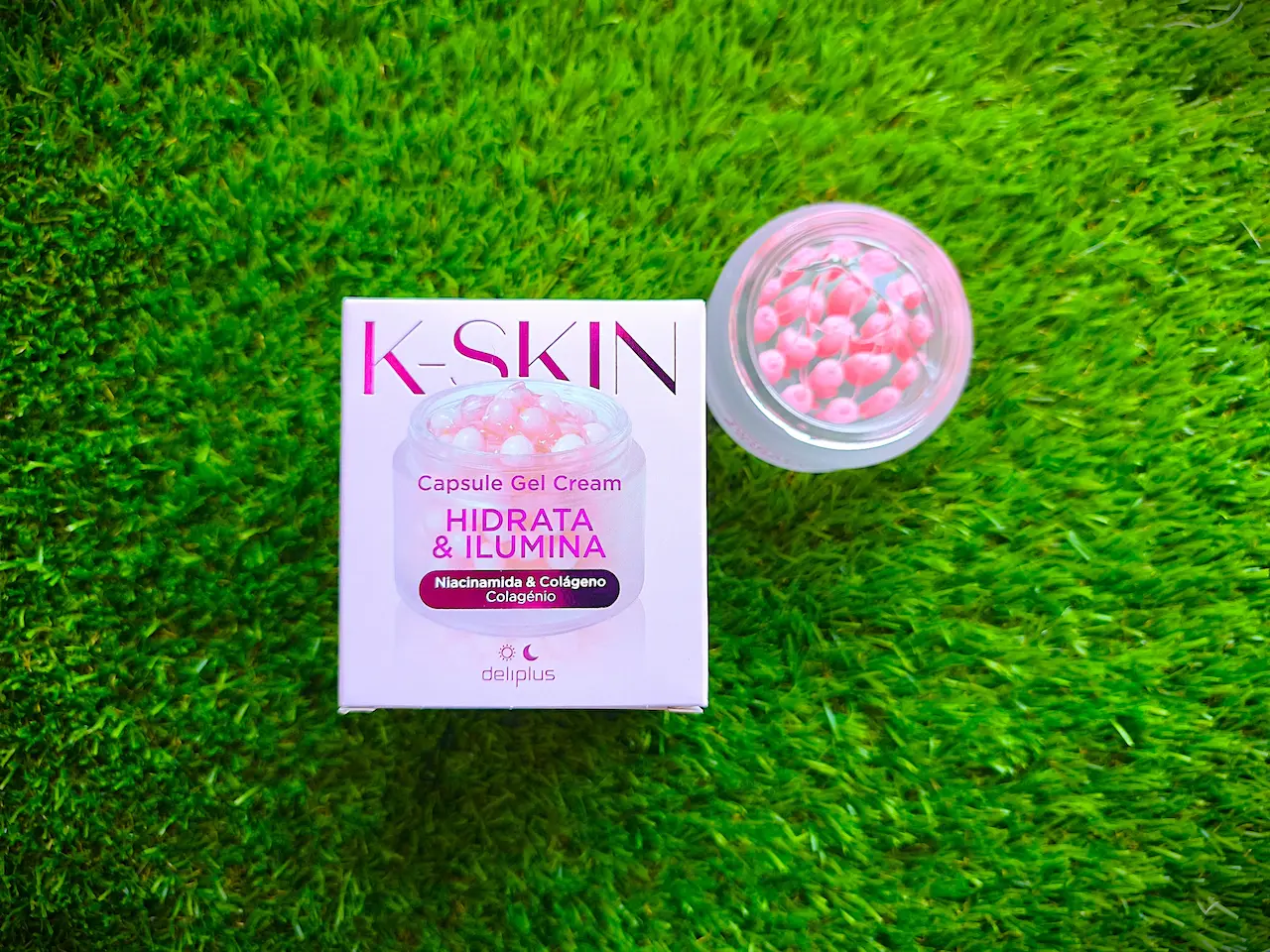
1. Hydrate & Illuminate Gel Facial Cream: The Power of Niacinamide
Marketed in a 50ml jar for €6.50, this dual-texture cream features a striking transparent gel that visually suspends dozens of small microcapsules of niacinamide and collagen. Its promise is to provide light day and night hydration that unifies skin tone and noticeably improves surface elasticity.
Upon analyzing the first ingredients of its INCI list, we are pleasantly surprised: the cream is the best-balanced and most rounded formula of the entire line. Its first compounds reveal a very robust moisturizing structure:
- Glycerin and Butylene Glycol (Positions No. 2 and No. 3): Fundamental humectants that act by trapping environmental water molecules to retain them in the stratum corneum.
- Niacinamide (Position No. 4): Situated in a privileged and cosmetically relevant position. Although Mercadona does not declare the exact percentage, its high presence guarantees that it will perform its real functions: reinforcing the barrier function, regulating sebum synthesis, minimizing the appearance of pores, and acting as a powerful antioxidant and anti-dark spot illuminator.
- Meadowfoam and sweet almond vegetable emollients (Positions No. 6 and No. 7): They demonstrate that, despite its light gel appearance, the formula provides the necessary emolliency to soften the face and prevent tightness without adding oclusivity or greasy heaviness.
Hydrolyzed collagen appears in a respectable eighth position. Here an essential scientific nuance must be made: topically applied collagen possesses a molecular weight too large to penetrate the dermis and reconstruct lost fibers; its real and legitimate function is to act as an excellent surface conditioner that forms an elastic and hydrophilic film to leave the skin smoother to the touch. The true hidden treasure of this product is its advanced multilayer hyaluronic acid system, combining up to six different variants (including 3D cross-linked polymers, fast-penetrating nano hyaluronic, and acetylated hyaluronic) wrapped by panthenol (vitamin B5), betaine, and soothing allantoin. It is an ideal composition for normal, dry, or dehydrated combination skin.
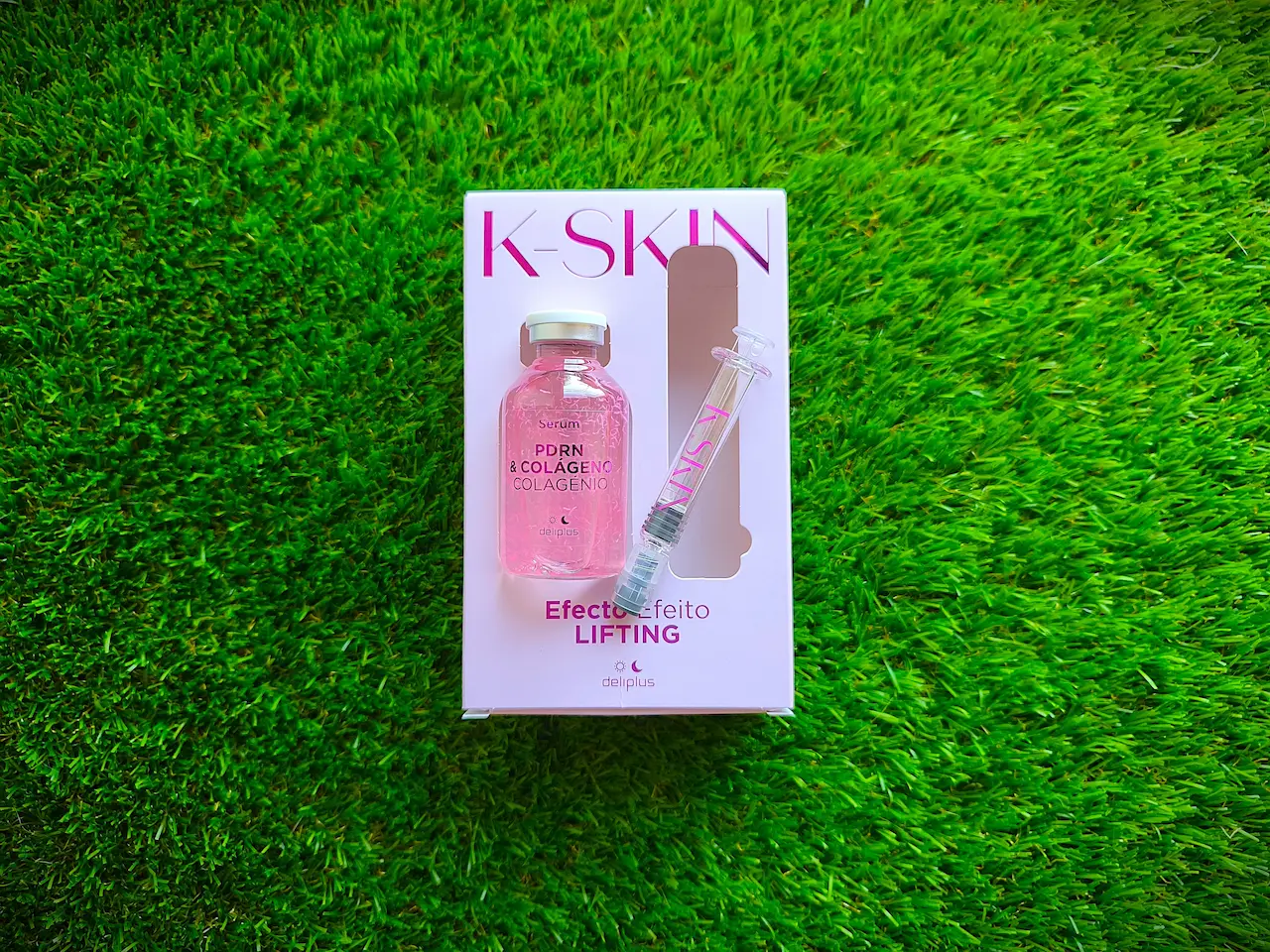
2. PDRN & Collagen Facial Serum: Tightening Threads?
It is indisputably the most spectacular and viral product of the line thanks to its 35ml format for €7.00 which includes a dosing syringe and "collagen thread" filaments floating in a fluid gel. Its commercial objective indicated on its labeling is to provide an immediate lifting effect and dewy, revitalized skin based on the use of PDRN.
However, upon deeply analyzing its INCI, the reality of the formula requires being much more cautious than with the cream. The base is a classic aqueous-humectant serum rich in glycols enriched with a hydrophilic modified silicone (Bis-PEG-12 Dimethicone) in fifth position, responsible for providing that silky glide and that immediate smooth skin optical finish. Where are the highlighted actives? Soluble collagen and its amino acids are located in positions No. 10 and No. 20, acting merely as superficial tightening film-formers.
The great PDRN enigma: On the INCI list, this active is officially identified under the term Sodium DNA, which is relegated to a distant position number 22. Being located so far down and lacking a declared concentration, it is impossible to evaluate if it is found in a dosage with real biological activity comparable to the expensive regenerating treatments of Korean clinics. Therefore, this serum should not be bought expecting medical miracles of deep cellular repair; it is a fantastic humectant fluid, but its complexity responds more to visual aesthetics than to high anti-aging concentration.
The Mystery of the Three Hidden Sun Filters in the K-Skin Serum
A technical detail that caught my attention as a pharmacist and that you should not overlook when analyzing the INCI of the K-Skin serum is the presence of three very specific ingredients: Ethylhexyl Methoxycinnamate, Butyl Methoxydibenzoylmethane, and Ethylhexyl Salicylate.
Any formulation professional will immediately recognize that these compounds are classic ultraviolet protection filters (chemical sunscreens). Given that Mercadona includes pictograms on the line suggesting its use both day and night, and that the product does not declare any tested SPF factor on its main packaging, it is vital to issue a clear dermocosmetic warning: this serum must under no circumstances be used as a substitute for your daily sunscreen. The inclusion of these molecular UV filters usually responds to a galenic strategy aimed at protecting the formula itself and preventing pigments, suspended threads, or photosensitive actives from degrading due to ambient light passing through the transparent bottle.
Comparative Table: The Entire K-Skin Line Under the Molecular Microscope
To help you choose with total confidence which of Deliplus's two launches best adapts to your routine and the specific needs of your skin type, I have prepared this technical comparative table:
|
Are These Deliplus Novelties Truly Korean Cosmetics (K-Beauty)?
The definitive dermopharmaceutical conclusion you should take away is very clear: Being named K-SKIN does not automatically make these products real Korean cosmetics. These are not formulas imported from Seoul nor developed under the rigorous manufacturing circuits of South Korea's traditional laboratories.
What Mercadona has done is an outstanding exercise in adapting international K-Beauty trends. It has taken trendy ingredients succeeding in Korean routines (polynucleotides, the multilayer hyaluronic system, and niacinamides), wrapped them in a very striking clinical aesthetic (visual capsules, threads, and a very eye-catching dispenser), and made them available to the mass consumer at low-cost prices. It is a very worthy Korean-inspired range for the supermarket, but it is far from being a concentrated K-Beauty clinical treatment.
If I had to choose an absolute winner based strictly on richness, balance, and logical INCI dosing, my pharmaceutical recommendation is the Hydrate & Illuminate Gel Cream. For €6.50 it offers a gem rich in niacinamide very high up in the formula, free of occlusive silicones, and with a sensational moisturizing array. The serum is a fun sensory experience to experiment with the concept of Sodium DNA, but its high presence of menthol, peppermint oil, and complex fragrances forces me to advise caution for use in people suffering from sensitive, reactive skin, or with an altered barrier function.
 medicube Capsule Cream with TXA + NiacinamideView product
 VT COSMETICS PDRN Capsule Cream 100View product
 Biochroma Serum Coreano, Effetto LiftingView product
 Korean Silk Peptide Serum AmpouleView product
Frequently Asked Questions (FAQs)
What are the K-Skin serum's "collagen threads" actually made of?
The INCI list reveals the galenic secret of their visual structure. Those suspended filaments we see floating in the transparent jar are not pure collagen fibers that will magically penetrate your wrinkles; they are polymeric structures created through the combination of natural gums and structuring agents such as Acacia Gum (Acacia Senegal Gum), Agar-Agar, and Calcium Alginate. These gums retain pigments, illuminating micas (Synthetic Fluorphlogopite), and tin oxide to mimic the appearance of clinical threads, dissolving pleasantly when spreading the gel over the skin via pressure.
Can I use the K-Skin cream and serum if I suffer from active acne breakouts?
With caution. Neither of the two formulas contains heavy occlusive ingredients like mineral oils or paraffins that immediately clog pores. The cream, thanks to its high dose of niacinamide, can actually help you partially regulate sebum production and soothe residual inflammation from marks. However, the serum incorporates peppermint essential oil and menthol; these actives provide a pleasant cooling effect, but in acne-prone skin with micro-wounds or inflammation, they could induce a vasodilatory response or unnecessary irritation in the follicle.
Do I have to shake the serum before applying the product?
Yes, it is highly recommended. Being a dense hydrogel with gum structures and suspended mica particles, heavy components and elastic filaments tend to accumulate by density in specific areas of the vial. To ensure that the syringe draws a homogeneous dose that balancedly combines the pure aqueous phase of the serum with the actives and the reflecting micas of the threads, gently shake the bottle up and down before inserting the dosing cannula upside down.
I hope this has been very helpful and see you in upcoming pharmaceutical analyses!