
 Español

You turn on the faucet, let the bathroom fill with steam, and enjoy a long shower with very hot water to unwind after a long day. It is a relaxing and immensely pleasant ritual, especially in the cooler months of the year. However, upon stepping out and looking in the mirror, dermocosmetic reality delivers a worrying reflection: a completely red face, an uncomfortable feeling of tightness that forces you to frantically search for a cream, and a diffuse itching that won't stop. Can hot water make sensitive skin worse?
If you suffer from reactive, sensitive skin or notice extreme dehydration right after your daily hygiene, it is very likely that the root of your problem is not exclusively found in the cleansers or creams making up your vanity bag. Water temperature and washing methodology are critical factors that directly impact the integrity of our tissue. As a pharmacist specialized in dermocosmetics, my purpose at Tinycosmetics is to provide you with answers based on scientific evidence to show you that, sometimes, small changes in your daily habits have a much more powerful impact on your skin health than modifying your entire routine overnight.
🎥 Learn to care for your barrier in a minute! Don't miss the detailed dermo-scientific explanation in this Short on my channel:
The "Dishwasher Effect": How Hot Water Dissolves Your Essential Lipids
To understand why high-temperature water is a genuine threat to reactive skin, we must visualize the most superficial layer of our face (the stratum corneum) as a solid wall of bricks. The bricks are corneocytes (cells packed with keratin) and the cement binding and waterproofing them is an intercellular lipid matrix composed of ceramides, cholesterol, and free fatty acids. This "cement" is absolutely responsible for keeping water inside our body and preventing pathogens, allergens, and environmental irritants from penetrating deep layers.
What happens when we expose this structure to very hot water for a prolonged time? A physical-chemical phenomenon identical to what we experience when washing dishes in the kitchen occurs: hot water possesses an extremely high emulsifying capacity, meaning it dissolves and sweeps away fatty lipids with extreme ease. When cleansing the face with water at elevated temperatures, we literally strip the skin of its protective natural oils. If we add the use of strong surfactants to this, the deprotection of the skin barrier is immediate and absolute.
The Sensitivity Cascade: Dehydration, Tightness, and Redness
Once hot water has weakened and "washed away" that intercellular lipid cement, the skin is left completely disarmed. Clinical and sensorial consequences manifest within minutes through a chain of reactions thoroughly studied by dermatology:
- Soaring Transepidermal Water Loss (TEWL): With no fatty layer to retain moisture, the internal water of the skin mass evaporates massively into the environment due to the temperature gradient, causing that annoying cardboard-like tightness sensation.
- Vasodilation and peripheral inflammation: Thermal heat immediately dilates the microcapillaries of the cheeks and the sides of the nose. In normal skin, this redness fades quickly; in sensitive skin or skin prone to rosacea, capillaries lose elasticity, chronicizing erythema and the burning sensation.
- Nerve hyperreactivity: With a cracked barrier, any substance (your cream's perfume, tap water's chlorine, or environmental pollution itself) penetrates down to the layers where nerve endings are located, triggering an exaggerated immune response in the form of itching, stinging, and reactive flare-ups.

Pharmaceutical Guidelines for Respectful Cleansing of Reactive Skin
Curbing the deterioration of sensitive skin doesn't always require replacing every bottle on your shelf with new pharmacy products; sometimes, correcting the methodology of your daily gestures makes an abysmal difference. If your skin irritates easily, it is essential that you engrave these technical guidelines into your hygiene routine:
- The lukewarm water standard: The ideal water for cleansing the face should be at a lukewarm or warm temperature (between 30°C and 34°C), as close as possible to the physiological temperature of the skin surface. It should feel neutral to the touch: neither too cold to fail in removing excess sebum nor hot enough to emulsify your lipids.
- Avoid direct washing under the shower stream: The water pressure from the showerhead combined with the high temperature we usually use for the body is an excessive physical aggression for the delicate skin of the face. Always wash your face independently at the sink.
- Fast and controlled cleanses: The facial cleansing process should take no longer than one minute. Minimize the contact time of water and cleansers with your skin to avoid the phenomenon of overhydration and subsequent lysis of the stratum corneum.
- Drying by contact, never by friction: When stepping out, use an exclusive cotton towel for the face or single-use wipes and dry the skin with gentle taps, gently placing the fabric against the face. Never drag or rub with the towel, as mechanical friction is a direct trigger for inflammation in sensitive skin.
 Cetaphil Gentle Skin CleanserView product
 La Roche Posay Lipikar AP+ Wash CreamView product
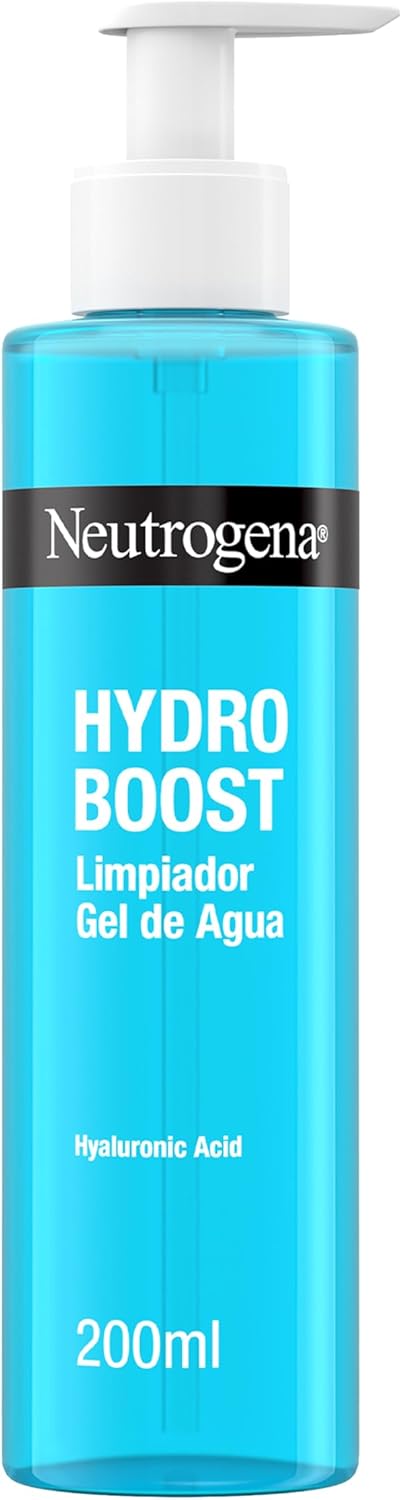 Neutrogena Hydro Boost Facial CleanserView product
The Small Post-Cleansing Gesture to Seal Hydration
For skin suffering from chronic dehydration or reactivity, there is a small galenic formulation trick you can apply today right after finishing your hygiene: apply your hydrating toner or barrier cream immediately after drying, seizing the 60-second window.
When skin is freshly cleaned and subtly damp, stratum corneum permeability is slightly higher. Applying a layer of a cream rich in biomimetic ingredients (such as ceramides, fatty acids, panthenol, or glycerin) at that precise moment acts as an artificial "emergency shield." The occlusive and humectant ingredients in the formula will immediately seal remaining moisture, blocking water evaporation and restoring comfort to the face before nerve endings detect environmental aggression.
Why Does Everything Irritate Me?: Take Ultimate Control of Your Skin
Learning to adjust water temperature is only the first step on a much deeper path toward recovering your cutaneous well-being. If you feel trapped in an endless loop where any cosmetic you buy causes pimples, redness, stinging, or flaking, you need to stop shooting in the dark by buying products blindly at the supermarket.
To help you restore peace to your face, I have condensed my years of scientific and healthcare practice into my instant-download digital guide: "Why does everything irritate me?: Guide to understanding, caring for, and recovering sensitive and reactive skin". In this interactive manual, you will learn step-by-step how to audit your cleansing habits, read INCI ingredients, and design a minimal rescue routine adapted to your skin's biology. Do not let sensitivity dictate how your face feels; take the reins of your health.
 Why does everything irritate me?: Guide to understanding, caring for, and recovering sensitive and reactive skin (Black and White Illustrated Edition)View product
 Why does everything irritate me?: Guide to understanding, caring for, and recovering sensitive and reactive skin (Color Illustrated Edition)View product
Remember that your skin is a living and dynamic organ that responds immediately to how you treat it in your day-to-day life.