
 Español
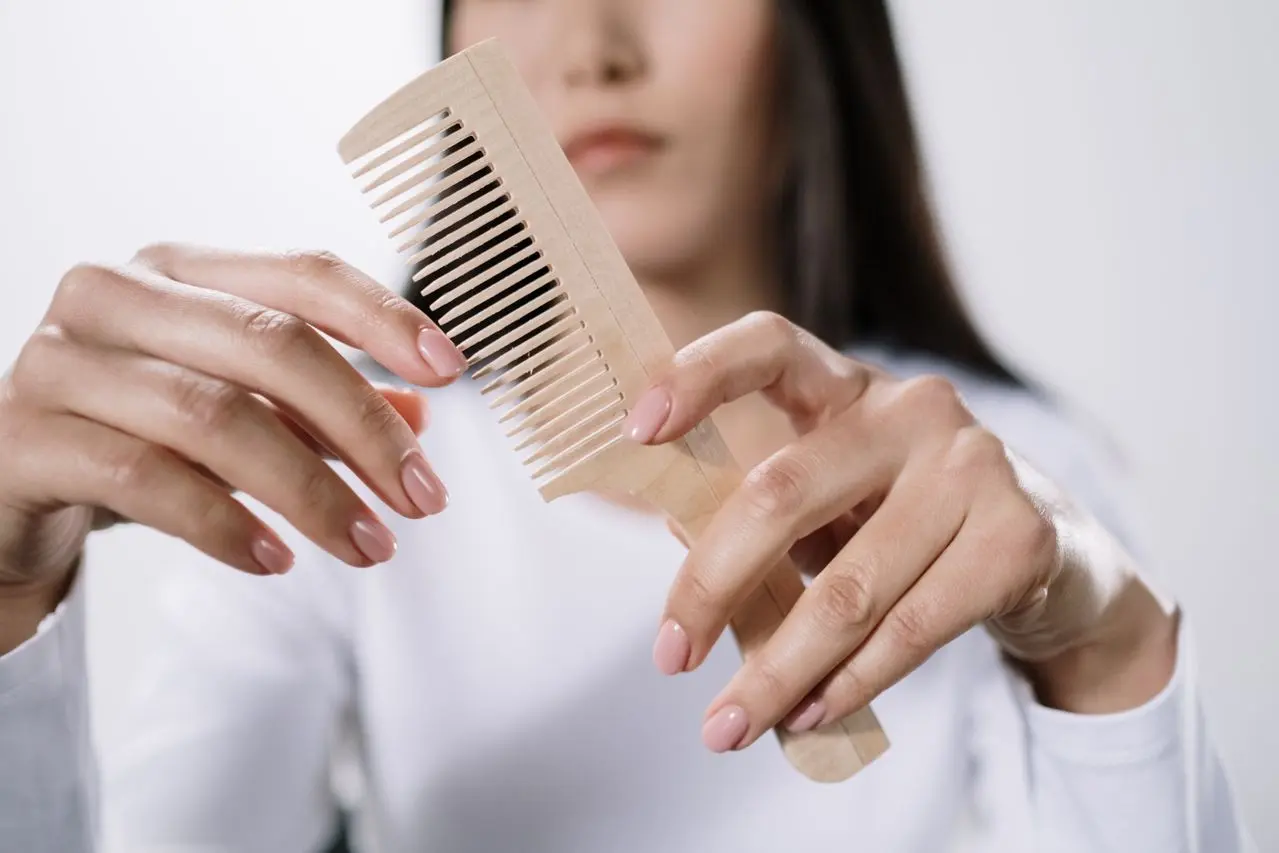
Autumn arrives, temperatures drop, days become shorter, and suddenly, the alarm sounds in the shower: the drain fills with strands of hair, the brush accumulates twice as much hair as a month ago, and you notice a loss of density that starts to worry you. Do you notice that your hair falls out much more every autumn? If the answer is a resounding yes, the first thing you should do is take a deep breath: in the vast majority of cases, this process is completely normal, reversible, and responds to an evolutionary behavior of our organism.
There is a perfectly documented dermo-capillary phenomenon known as seasonal telogen effluvium, an alteration of the hair growth cycle that synchronizes with the change of season, becoming especially evident between the end of summer and the autumn months. As a pharmacist, my goal at Tinycosmetics is to bring you scientific light, banish the myths of hair marketing, and explain to you with dermopharmaceutical evidence what is really happening to your scalp and how you can manage it without spending a fortune on miraculous solutions.
🎥 I'll explain it to you in a minute! Hit play to watch the scientific analysis in a vertical format that I prepared in this Short:
The Three Phases of the Hair Cycle: How Hair Grows and Falls
To understand why hair sheds massively at this time of year, it is essential to understand that hair is not a static structure. Each of the approximately 100,000 hair follicles on our scalp works completely independently, going through a biological clock divided into three consecutive and uninterrupted phases:
- Anagen Phase (Growth Phase): It is the most metabolically active stage. Root cells divide rapidly, and the hair grows approximately one centimeter per month. Under normal physiological conditions, between 85% and 90% of your mane is in this phase, which usually lasts between 2 and 7 years depending on each individual's genetics.
- Catagen Phase (Transition Phase): A very brief stage lasting barely 2 or 3 weeks. Here, hair growth stops completely, the follicle shrinks, and the strand detaches from the dermal papilla (the base providing nutrients and blood supply).
- Telogen Phase (Shedding or Resting Phase): The mature hair remains mechanically anchored to the follicle in a state of absolute rest for about 3 months. At the end of this period, the strand finally sheds (often pushed by a new hair in the anagen phase starting to sprout right below) and falls out. In a healthy scalp, only 10% to 15% of the hair is in the telogen phase simultaneously, which is equivalent to naturally losing between 50 and 100 hairs per day.
What Exactly Is Seasonal Telogen Effluvium?
Seasonal telogen effluvium occurs when a stimulus or environmental factor suddenly alters this delicate biological clock. Instead of follicles entering the telogen phase gradually and staggered, an unusually high percentage of hairs (which can rise to 20% or 30% of the total) abruptly stops its growth phase and shifts massively and simultaneously into the resting and shedding phase.
The result is a diffuse, striking, and homogeneous fall all over the scalp. Unlike what happens in chronic hormonal processes, in seasonal effluvium the hair follicle is neither destroyed nor miniaturized; it simply takes a forced break. This means that every hair you leave on the brush will grow back once the follicle resumes its usual active cycle.
The "Delayed Effect": Why Hair Loss Appears Weeks After Summer
One of the most frequent questions at the pharmacy is: "If the culprit is the change of season, why does heavy hair loss start a few weeks after summer ends?" The answer lies in the telogen phase's own biological calendar.
During the summer months, our body experiences metabolic stress caused by intense solar radiation, rising temperatures, changes in sleep rhythms, and the direct oxidative damage of chlorine, salt, and UV rays on the scalp. This environmental aggression acts as a "trigger" massively pushing follicles to enter the catagen and subsequently telogen phases. Since the telogen phase lasts exactly about 3 months before the hair mechanically sheds, hair damaged or desynchronized in July and August will take between 8 and 12 weeks to fall out. This is why the peak of hair loss manifests so abruptly during the month of October.
When Does It Stop Being Normal and Is It Advisable to Consult a Dermatologist?
Seasonal telogen effluvium is a self-limiting process: it usually lasts between 4 and 6 weeks, and as winter progresses, hair loss completely subsides and the hair progressively recovers its density. However, as healthcare professionals, we must know how to draw the red line between physiological seasonal renewal and underlying hair pathology.
You should sound the alarm and schedule a consultation with a dermatologist or trichology specialist if you detect any of the following clinical signs:
- Prolonged duration: If massive hair loss persists uninterrupted for more than two or three months without signs of stabilization.
- Localized density loss: If you notice that the hair visibly thinned in very specific areas, such as the parting line, the crown area, or the temples, which could suggest the onset of androgenetic alopecia.
- Appearance of bald spots or patches: If you observe circular areas completely devoid of hair (a characteristic sign of alopecia areata).
- Scalp symptoms: If hair loss is accompanied by root pain (trichodynia), intense itching, whitish or yellowish flaking, inflammation, or redness.
Pharmaceutical Habits to Care for Your Scalp This Autumn
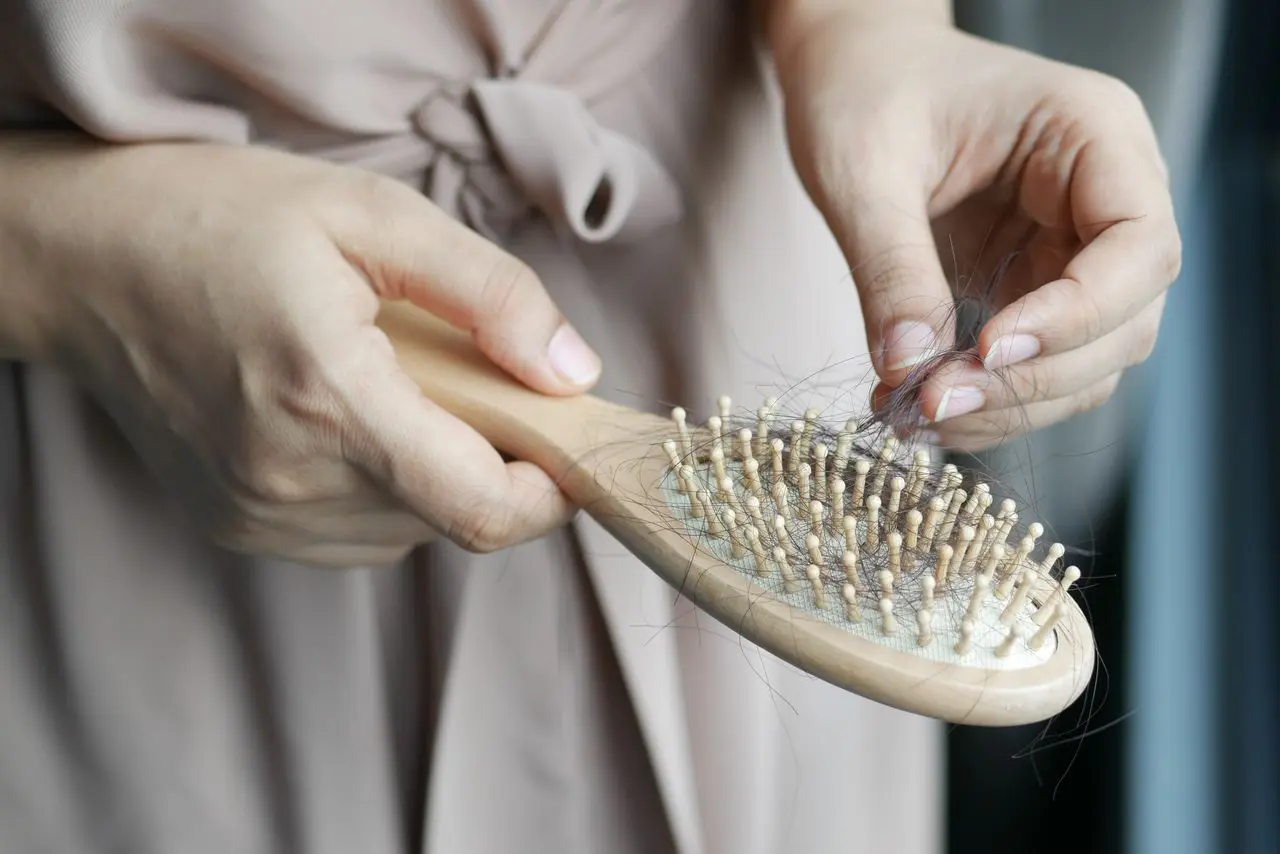
During seasonal effluvium, there are no miraculous shampoos or lotions that will magically weld hair that has already entered the shedding phase back on; that hair is biologically programmed to shed. What we can and must do is optimize scalp health so that the new hair sprouting is born strong, elastic, and with optimal anchorage. Here are the essential dermopharmaceutical guidelines:
- Maintain rigorous hygiene: Do not stop washing your hair out of fear of watching it fall out. Water and shampoo only dislodge hair that was already loose in the follicle. Accumulating sebum, sweat, and residue at the root suffocates the follicle, weakens new hair, and promotes conditions like seborrheic dermatitis that worsen hair loss.
- Gentle scalp massages: Dedicate a couple of minutes during washing to massage the scalp with your fingertips (never with your nails) using circular motions. This promotes local blood microcirculation, helping oxygen and nutrients reach the dermal papilla of the growing follicle.
- Cellular nutrition from within: Ensure your autumn diet is rich in sulfur amino acids (such as cystine and methionine, precursors of keratin), iron, zinc, biotin, and B-complex vitamins. If you suspect any protein deficiency, a well-formulated hair supplement can act as a fantastic temporary support.
- Avoid mechanical traction and thermal damage: During these weeks, minimize the use of heat tools (straighteners and dryers at maximum temperature) directly on the root and avoid excessively tight hairstyles (very tight ponytails or buns) that exert unnecessary physical tension on follicles already going through a stage of extreme fragility.
 Vichy Anti-Hair Loss ShampooView product
 ISDIN Lambdapil Anti-Hair Loss ShampooView product
 PILEXIL Anti-Hair Loss ShampooView product
 Freshly - Hair Growth & DensityView product
Understanding your body's biological rhythms is the definitive step to caring for your mane with serenity and scientific rigor.